

Staff profile
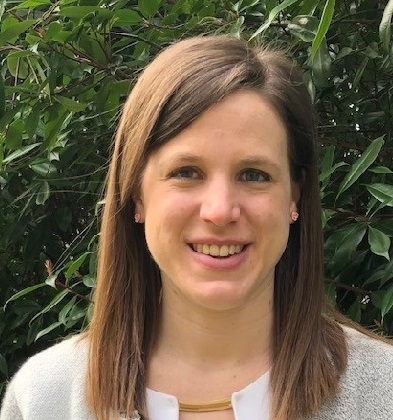
| Affiliation | Telephone |
|---|---|
| Assistant Professor in the Department of Sport and Exercise Sciences | |
| Fellow of the Wolfson Research Institute for Health and Wellbeing |
Biography
Katie joined the department in 2021 following a postdoctoral fellowship at the University of British Columbia. A clinical exercise physiologist by training, she expanded her work through her time at UBC, where her work examined the risk factors for the most common forms of cancer (breast, prostate, colorectal, and lung) as well as the evaluation of various nutrition and physical activity interventions designed to increase physical activity and improve nutrition in both cancer and the general population. Prior to this, she completed her PhD in the Department of Kinesiology at the University of Waterloo. Her work focused on alterations in glucose metabolism that result following a diagnosis of prostate cancer and how metabolism changes during cancer treatment.
Katie’s current research programme draws from all of her previous training. She looks to examine how nutrition and physical activity contribute to cancer incidence and outcomes for survivors and how nutrition and exercise interventions can reduce incidence and improve outcomes for cancer survivors. She is currently working with the Northern Cancer Alliance and the County Durham and Darlington NHS Foundation Trust to improve cancer prehabilitation across the North East and beyond. Cancer prehabilitation is a multimodal intervention that incorporates nutrition, physical activity, psychosocial support and other lifestyle modifications to improve patients' readiness for their cancer treatments. The aim of her work is to improve outcomes for cancer patients, including reducing cancer incidence, recurrence, and co-morbidities, and ultimately improving quality of life for cancer survivors.
She is also interested in the use of new technology, such as activity trackers (e.g., Fitbit) and apps, to increase physical activity and improve nutrition in cancer and other clinical populations. Part of her prehabilitation work investigates how to effectively use digital approaches to improve access to prehabilitation. In her work, Katie employs an integrative interdisciplinary approach that draws from a variety of disciplines, including body composition, nutrition, physiology, implementation science, evaluation and beyond.
PhD Supervision: If you are interested in undertaking postgraduate studies with Katie, please contact her directly.
Research interests
- Integrative Metabolism
- Body Composition
- Cancer and Clinical Population
- Clinical Exercise Physiology and Nutrition
- Nutrition and Physical Activity Programs
- Program Evaluation
- Knowledge Translation and Mobilisation
Publications
Journal Article
- Feasibility, acceptability, and preliminary effectiveness of implementing a 12-week home-based aerobic and resistance exercise program for breast cancer patients receiving endocrine treatment in Indonesia: A mixed methods studyAstari, Y. K., Hutajulu, S. H., Prabandari, Y. S., Bintoro, B. S., Wibowo, R. A., Hardianti, M. S., Hartopo, A. B., Sebastiano, K. M. D., Allsop, M. J., & Burke, S. (2024). Feasibility, acceptability, and preliminary effectiveness of implementing a 12-week home-based aerobic and resistance exercise program for breast cancer patients receiving endocrine treatment in Indonesia: A mixed methods study. SAGE Open Medicine, 12. https://doi.org/10.1177/20503121241272706
- Development of a ParticipACTION App–Based Intervention for Improving Postsecondary Students’ 24-Hour Movement Guideline Behaviors: Protocol for the Application of Intervention MappingFlood, S. M., Thompson, B., Faulkner, G., Vanderloo, L. M., Blackett, B., Dolf, M., Latimer-Cheung, A. E., Duggan, M., Di Sebastiano, K. M., Lane, K. N., Brouwers, M. C., McKenna, J., Chulak-Bozzer, T., Fuller, D., Ruissen, G. R., Sturrock, S. L., & Tomasone, J. R. (2023). Development of a ParticipACTION App–Based Intervention for Improving Postsecondary Students’ 24-Hour Movement Guideline Behaviors: Protocol for the Application of Intervention Mapping. JMIR Research Protocols, 12, e39977. https://doi.org/10.2196/39977
- An Evaluation of a Commercialized mHealth Intervention to Promote Physical Activity in the WorkplaceDi Sebastiano, K. M., Lau, E. Y., Yun, L., & Faulkner, G. (2022). An Evaluation of a Commercialized mHealth Intervention to Promote Physical Activity in the Workplace. Frontiers in Public Health., 10, Article 740350. https://doi.org/10.3389/fpubh.2022.740350
- The University of British Columbia healthy beverage initiative: changing the beverage landscape on a large post-secondary campusDi Sebastiano, K. M., Kozicky, S., Baker, M., Dolf, M., & Faulkner, G. (2020). The University of British Columbia healthy beverage initiative: changing the beverage landscape on a large post-secondary campus. Public Health Nutrition, 24(1). https://doi.org/10.1017/s1368980020003316
- Don’t Walk So Close to Me: Physical Distancing and Adult Physical Activity in CanadaDi Sebastiano, K. M., Chulak-Bozzer, T., Vanderloo, L. M., & Faulkner, G. (2020). Don’t Walk So Close to Me: Physical Distancing and Adult Physical Activity in Canada. Frontiers in Psychology, 11. https://doi.org/10.3389/fpsyg.2020.01895
- Glucose impairments and insulin resistance in prostate cancer: the role of obesity, nutrition and exerciseDi Sebastiano, K., Pinthus, J., Duivenvoorden, W., & Mourtzakis, M. (2018). Glucose impairments and insulin resistance in prostate cancer: the role of obesity, nutrition and exercise. Obesity Reviews, 19(7). https://doi.org/10.1111/obr.12674
- Glucose metabolism during the acute prostate cancer treatment trajectory: The influence of age and obesityDi Sebastiano, K. M., Bell, K. E., Mitchell, A. S., Quadrilatero, J., Dubin, J. A., & Mourtzakis, M. (2018). Glucose metabolism during the acute prostate cancer treatment trajectory: The influence of age and obesity. Clinical Nutrition, 37(1). https://doi.org/10.1016/j.clnu.2016.11.024
- Elevated C-Peptides, Abdominal Obesity, and Abnormal Adipokine Profile are Associated With Higher Gleason Scores in Prostate CancerDi Sebastiano, K. M., Pinthus, J. H., Duivenvoorden, W. C., Patterson, L., Dubin, J. A., & Mourtzakis, M. (2016). Elevated C-Peptides, Abdominal Obesity, and Abnormal Adipokine Profile are Associated With Higher Gleason Scores in Prostate Cancer. The Prostate, 77(2). https://doi.org/10.1002/pros.23262
- The Role of Dietary Fat throughout the Prostate Cancer TrajectoryDi Sebastiano, K., & Mourtzakis, M. (2014). The Role of Dietary Fat throughout the Prostate Cancer Trajectory. Nutrients, 6(12). https://doi.org/10.3390/nu6126095
- Accelerated muscle and adipose tissue loss may predict survival in pancreatic cancer patients: the relationship with diabetes and anaemiaSebastiano, K. M. D., Yang, L., Zbuk, K., Wong, R. K., Chow, T., Koff, D., Moran, G. R., & Mourtzakis, M. (2013). Accelerated muscle and adipose tissue loss may predict survival in pancreatic cancer patients: the relationship with diabetes and anaemia. British Journal of Nutrition, 109(2). https://doi.org/10.1017/s0007114512001067
- A critical evaluation of body composition modalities used to assess adipose and skeletal muscle tissue in cancerDi Sebastiano, K. M., & Mourtzakis, M. (2012). A critical evaluation of body composition modalities used to assess adipose and skeletal muscle tissue in cancer. Applied Physiology, Nutrition, and Metabolism, 37(5). https://doi.org/10.1139/h2012-079