

/prod01/prodbucket01/media/durham-university/research-/research-centres/centre-for-environment-and-the-humanities/CEH-1903X793.png)
People
Co-Directors
Simona Capisani (Philosophy)

Simona Capisani’s work engages with matters of climate justice and governance, 'climate mobilities' and immigration, adaptation, biodiversity, and emergent climate technologies such as geoengineering. While her research is grounded in normative and political theory, she engages with and contributes to interdisciplinary research in the social sciences, law, and policy, in particular on the normative basis and underlying conceptual assumptions of climate governance.
Robert Song (Theology and Religion)

Robert Song is a Christian theological ethicist whose work ranges across many areas of applied ethics. His current research focuses on hope in a time of climate crisis, both its ontological and theological grounding and the social, economic and political practices that embody hope and make it meaningful. He is an advisor to the Church of England on social and environmental investment, and is Programme Director for the MA in Environmental Humanities.
Committee
Francisco-J Hernández Adrián (Modern Languages and Cultures)
Jessica Lehmann (Geography)
Kerstin Oloff (Modern Languages and Cultures)
Axel Pérez Trujillo (Modern Languages and Cultures)
 Axel Pérez Trujillo’s research engages the ecological imaginaries of contemporary Latin America through a focus on slow violence, entanglement and vibrant materialism. He has published Imagining the Plains of Latin America: An Ecocritical Study (2021), and is writing on the Drought Narratives of Contemporary Latin America, which looks at the role of storytelling and women writers in expressing the climate crisis through its impact on vulnerable communities.
Emily Webster (Philosophy)
Members
Penelope Anthias (Geography)
 Penelope's research examines struggles around indigeneity, territory, and gas extraction in the Chaco region of Bolivia. Her current Untapped Reserves project investigates the spatial practices and politics involved in gas development in Bolivia’s protected areas. She is interested in how conservation geographies are being reworked and repurposed by oil companies, state authorities and anti-extractivist resistance movements. She is also a film-maker.
Andrew Baldwin (Geography)
 Andrew Baldwin has a long-standing interest on race and climate change with specific focus on the epistemological dimensions of climate mobility. His book The Other of Climate Change: Racial Futurism, Migration, Humanism was published by Rowman and Littlefield in 2022. He is currently writing a critical genealogy on 'climate mobility' discourse that seeks to understand how 'climate mobility' became an object requiring government.
Naomi Booth (English Studies)
 Naomi Booth is a fiction writer, whose academic research and creative practice has focussed on the long history of swooning and on literary depictions of the body, particularly the pregnant body, in relation to the environment. She is particularly interested in environmental philosophy’s relation to literary genre(s), and has written on vampiric swoons and ‘dark ecology’, and anti-anthropomorphic novels.
Adam Bridgen (English Studies)
 Adam Bridgen is interested in how British labouring-class poets responded to the dramatic changes in social, economic, and environmental relations that were connected with Britain’s rise to imperial dominance in the period 1700-1830. His current project explores how working-class writers generated new environmental understandings in response to the impacts of extractivism in their localities during the initial stages of the Industrial Revolution.
Harriet Broadfoot (Education)
Harriet Broadfoot’s research is in early childhood education with a focus on compassion together with well-being, global citizenship and sustainability. She is interested in the environments young children inhabit and how we can best support them in the present and future to be well and live well together with others (human and nonhuman) through fostering their innate capacity for compassion. This stems from a concern with holistic well-being, peace and living in harmony with the earth.
Angela Marques Filipe (Sociology)
 Angela Marques Filipe leads on the theme Climate and Health, connecting medical and environmental humanities. A sociologist by training, she has an interdisciplinary background in international and science and technology studies. Her research explores the socio-cultural, ecological, and political dimensions of health, with projects on global histories of contested conditions, activism, and care ecosystems; models of environmental adversity, disease risk, and vulnerability; and ecoanxiety.
Edith Hall (Classics)
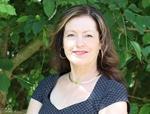 Edith Hall specialises in ancient Greek literature and philosophy and their continuing presences in modernity. She has published thirty-eight books and leads a campaign to make ancient worlds accessible in state secondary education and prisons. Her works linking literature and the environment include Epic of the Earth: Reading Homer's Iliad in the Fight for a Dying World (2025) and Trees in Ancient Greek and Roman Poetry: An Ecocritical Approach to Classics (co-edited with Alison Sharrock).
Silvia Hassouna (Geography)
 As a political-cultural geographer, Silvia is interested in the links between nature, nationalism and memory, particularly in the Middle East. Her research focuses on the histories of geographical knowledge and the construction of nature in colonial and settler colonial contexts. Her recent work explores Palestinian cultural activism and ecological practices in the West Bank, showing how art, activism and ecology can challenge environmental violence and envision sustainable and equitable futures.
Maximilian Hepach (Geography)
 As a historical and cultural geographer of climate change, Maximilian’s current research explores the physiological and psychological impact of unprecedented weather. His research traces the development of medical meteorology and climatology from the nineteenth century to the present, uncovering how knowledge around the “meteorological body” was produced, and connecting this with contemporary weather-health practices in the context of climate change.
Alex Hibberts (History)
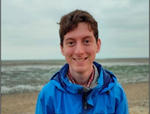 Alex Hibberts is a climate and environmental historian specialising in reconstructing weather and climate before 1800, and untangling the complex inter-relationship between social, economic and environmental change in late medieval and early modern Britain. He has previously collaborated with archaeologists, geologists, historical climatologists and physical geographers, and has also worked with non-academic stakeholders, such as Northumberland National Park.
Laura McCormick Kilbride (English Studies)

Laura McCormick Kilbride’s current research asks what writing about gardens can tell us about the way in which humans think and engage with the environment. Like theatre, gardens are at once a complete artwork and yet they are made from living things. It is this paradox which first led her to coin the term ‘artenatural’ to convey their hybrid status as both ‘natural’ and ‘artefactual’. She is currently writing about ecocriticism, the language of flowers, and Derek Jarman’s garden as a queer memorial.
John S. Lee (History)
 John S. Lee is an environmental historian of early modern East Asia, particularly the Korean peninsula, with interests in pre-industrial forestry, the premodern history of the conservationist state, and the long-term environmental legacies of Eurasian empires. His current projects examine the longest continuous state forestry system in world history, that of Korea's Chosŏn dynasty, as well as the environmental legacies of the Mongol Empire in Asia.
Antonia Manresa (Education)
 Antonia's research interests are in intercultural and indigenous education, arising from her ongoing collaboration with Amazonian community groups campaigning against oil extraction in their territories. This has changed her outlook to environmental education, focusing on understanding diverse situated knowledges and practices and the significance of socio-political contexts. Her current research explores multilingual practices and ontological diversity in formal and informal educational spaces.
Karen Milek (Archaeology)
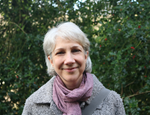 Karen is an environmental archaeologist who uses analyses of soils and sediments, integrated with historical and literary sources, to understand how past people and animals interacted with their environments. Working at scales from microscopic floor surfaces to buildings, sites, field systems and landscapes, her research focusses on the Viking Age and medieval periods especially in the North Atlantic Region, but she is interested in prehistoric and historic archaeology anywhere in the world.
Gerald Moore (Modern Languages and Cultures)
 Gerald is a political philosopher of technology, now working on philosophical questions emerging at the intersection of Science and Technology Studies, neuroscience and the life sciences. He has a particular interest in the ways in which the ecological emergency can be understood as a crisis of our cultural (technological, organised inorganic) environments, as much as organic ones, and has written on consumption as a form of addiction.
Marijn Nieuwenhuis (Geography)
 Marijn Nieuwenhuis’s research sits at the intersection of cultural and political geography and critical international relations, and is driven by a curiosity for conceptual art, overlooked objects, unexpected places, and elemental experiments. He has written on topics such as holes, weather, air, breathing, skin, trust, and sand. Much of his writing is inspired by the places he inhabits and the human and non-human animals he encounters there. He is currently writing about respiratory dust, the lives and afterlives of back lanes, and the elemental politics of fires.
Claudia Nitschke (Modern Languages and Cultures)
 Claudia Nitschke is working on the historical roots of today’s crises in property, inequality, and ecological collapse by examining eighteenth century German Robinsonades and Romantic mining narratives. Her project reveals how these texts interrogated the ethics of acquisition, labour, and human dominion, and by bridging literary, philosophical, and ecological histories, provides historical insights with direct relevance to contemporary debates on exploitation, sustainability, and property.
David Petts (Archaeology)
 David’s research ranges across the early middle ages (AD400-1000) and the post-medieval period, with a common thread in maritime cultural landscapes, islands and the sea and their role in constructing social landscapes. This includes the symbolic and ritual significance of islands and other watery places, and the society and economy of fishing communities. His work is mainly focused on North East England (notably Holy Island) and North West France.
Anupama Ranawana (Theology and Religion)
 Anupama Ranawana is a postdoctoral researcher in the Department of Theology and Religious Studies at the University of Durham. Prior to this she worked in international development, doing specific work on gender and the ecological crisis. She holds terminal degrees in Divinity and Global Politics and has research and teaching interests in ecological justice, global social justice, feminist liberation theology and anti-colonial research methodology.
Andrew Russell (Anthropology)
 Andrew Russell is a public health anthropologist who works at the interface of knowledge/research and practice. His early work focussed on the meanings of ‘environment’ for the Yakkha, a Tibeto-Burman group in East Nepal. His interest in tobacco morphed into concern for the environmental destruction wrought by tobacco crop monoculture and tobacco production. A staunch advocate of sustainable transport, he travelled to the COP28 in Dubai using trains and buses for nine-tenths of the journey.
David Schley (History)

David Schley’s research focuses on nineteenth-century North American urban and environmental history, with particular interests in infrastructure and mobilities. His first book, Steam City: Railroads, Urban Space, and Corporate Capitalism in Nineteenth-Century Baltimore, was published in 2020. Currently he is working on two projects: a study of traffic control in New York in an age of mass migration, and a history of the U.S.-Trinidad asphalt trade at the turn of the twentieth century.